
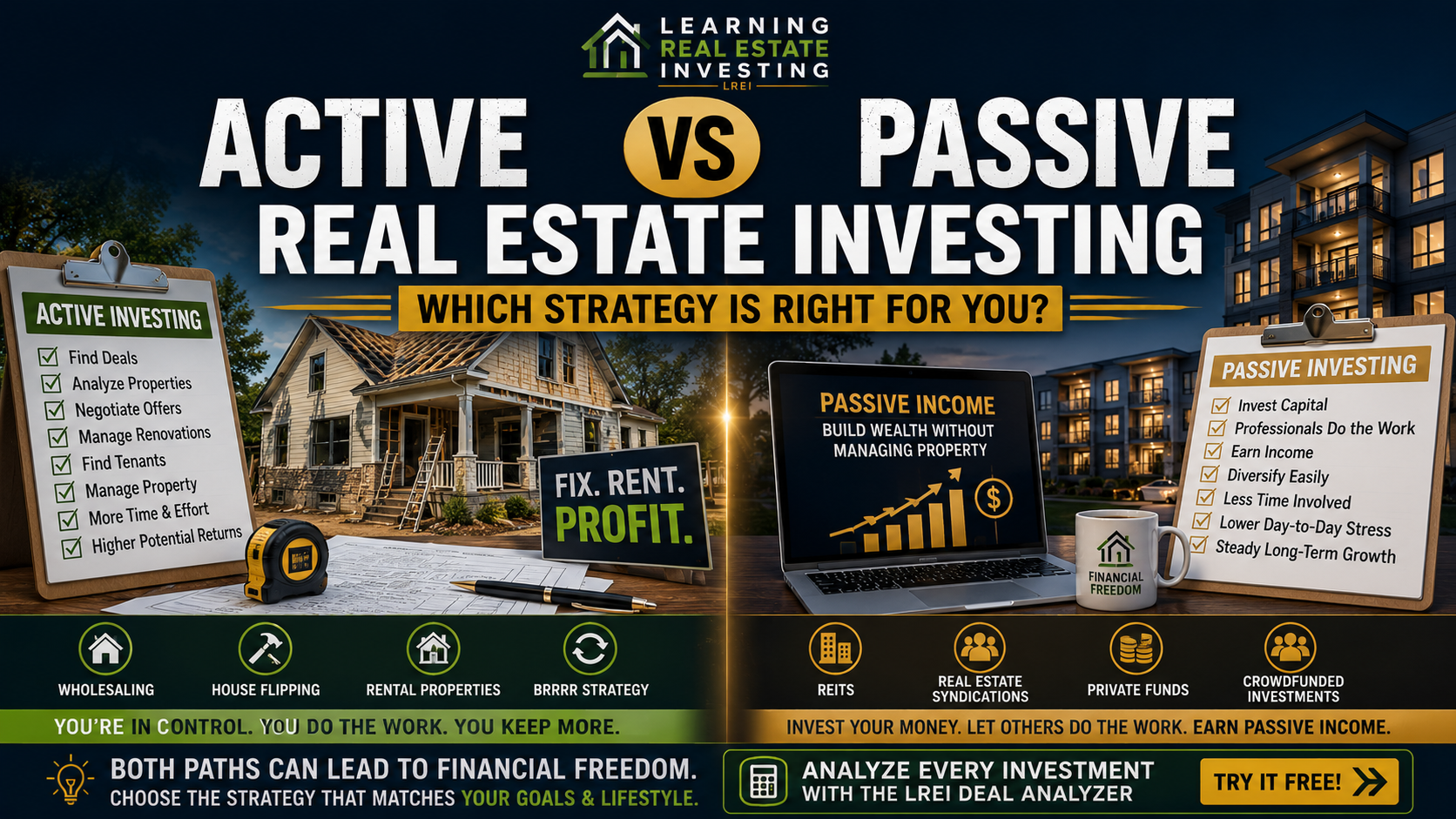
Active vs Passive Real Estate Investing: Which Strategy Is Right for You?
One of the first decisions every new investor must make is whether they want to be an active investor or a passive investor. Both approaches can build wealth through real estate, but they require different levels of time, effort, capital, and involvement.
Some investors enjoy finding deals, negotiating with sellers, renovating homes, and managing rental properties. Others prefer investing their money while letting experienced professionals handle the day-to-day work. Understanding the differences can help you choose the strategy that best fits your financial goals and lifestyle.
Quick Answer
Active real estate investing requires your direct involvement in finding, buying, managing, or selling properties. Passive real estate investing allows you to invest in real estate while someone else handles most of the work in exchange for a portion of the returns.
What Is Active Real Estate Investing?
Active investing means you’re personally involved in the investment process. You make decisions, analyze deals, negotiate contracts, oversee repairs, manage tenants, or market properties for sale.
Although active investing requires more time and effort, it often gives investors greater control over profits and decision-making.
Examples of Active Investing
- Wholesaling houses
- House flipping
- Buying rental properties
- BRRRR investing
- Self-managing rental properties
- Small multifamily investing
Advantages of Active Investing
- Greater control over investment decisions.
- Potential for higher returns.
- Opportunity to build experience quickly.
- Ability to force appreciation through improvements.
- Direct involvement in every deal.
Keep in Mind
Higher potential returns often come with increased responsibility. Active investors spend more time finding deals, managing projects, and solving problems.
What Is Passive Real Estate Investing?
Passive investing allows you to benefit from real estate without handling the day-to-day responsibilities. Instead, professionals manage the properties while you share in the income or appreciation.
Passive investing is often attractive to busy professionals, retirees, or investors who want diversification without becoming landlords.
Examples of Passive Investing
- Real Estate Investment Trusts (REITs)
- Real estate syndications
- Private real estate funds
- Crowdfunded real estate investments
- Limited partnership investments
Advantages of Passive Investing
- Less day-to-day involvement.
- No tenant management.
- No renovation responsibilities.
- Diversification across multiple properties.
- Potential for recurring income.
Which Strategy Makes More Money?
There’s no universal answer. Active investors often have the potential to earn higher returns because they create value through negotiation, renovations, and operational improvements.
Passive investors may accept lower returns in exchange for convenience, reduced workload, and professional management.
How Much Time Do You Have?
Your available time plays a major role in choosing the right strategy.
| Active Investing | Passive Investing |
|---|---|
| High time commitment | Minimal time required |
| Higher control | Less control |
| Potentially higher returns | Steadier, hands-off returns |
| Requires ongoing management | Professional management |
Can You Do Both?
Absolutely. Many successful investors combine active and passive strategies. For example, they may wholesale properties or flip houses to generate income, then invest those profits into long-term rental properties, syndications, or REITs to build passive income.
As your portfolio grows, transitioning from active income to passive income can help you create long-term financial stability while reducing the amount of time you spend managing investments.
Analyze Every Opportunity Before Investing
Whether you’re pursuing active or passive investing, understanding the numbers is essential. Analyze expected cash flow, return on investment, appreciation potential, financing costs, and overall risk before committing your money.
📊 Make Smarter Investment Decisions
The LREI Deal Analyzer helps you calculate ARV, cash flow, ROI, repair costs, BRRRR projections, and Maximum Allowable Offer before investing.
📘 Build the Right Investing Strategy
Download the FREE first chapter of The Real Estate Investing Blueprint and learn how to choose the investing strategy that matches your goals, budget, and experience level.
Final Thoughts
Neither active nor passive real estate investing is universally better. The right choice depends on your available time, financial goals, risk tolerance, and desire to be involved in managing investments.
Many investors begin with active strategies to build capital and experience, then gradually shift toward passive investments that generate long-term income with less day-to-day involvement. Whatever path you choose, understanding the numbers and continuing your education will give you the best chance for lasting success.
Frequently Asked Questions
What is active real estate investing?
Active real estate investing involves personally finding, buying, managing, renovating, or selling investment properties to generate income and build wealth.
What is passive real estate investing?
Passive investing allows you to invest in real estate while professionals manage the properties or investments on your behalf.
Which strategy is better for beginners?
It depends on your goals. Beginners who want hands-on experience often choose active investing, while those seeking minimal involvement may prefer passive options.
Can I combine active and passive investing?
Yes. Many investors actively generate income through wholesaling or flipping while building passive income through rentals, REITs, or syndications.
Which strategy builds wealth faster?
Active investing may provide higher earning potential, but passive investing can offer consistent long-term growth with less day-to-day responsibility. Many successful investors use both approaches.