
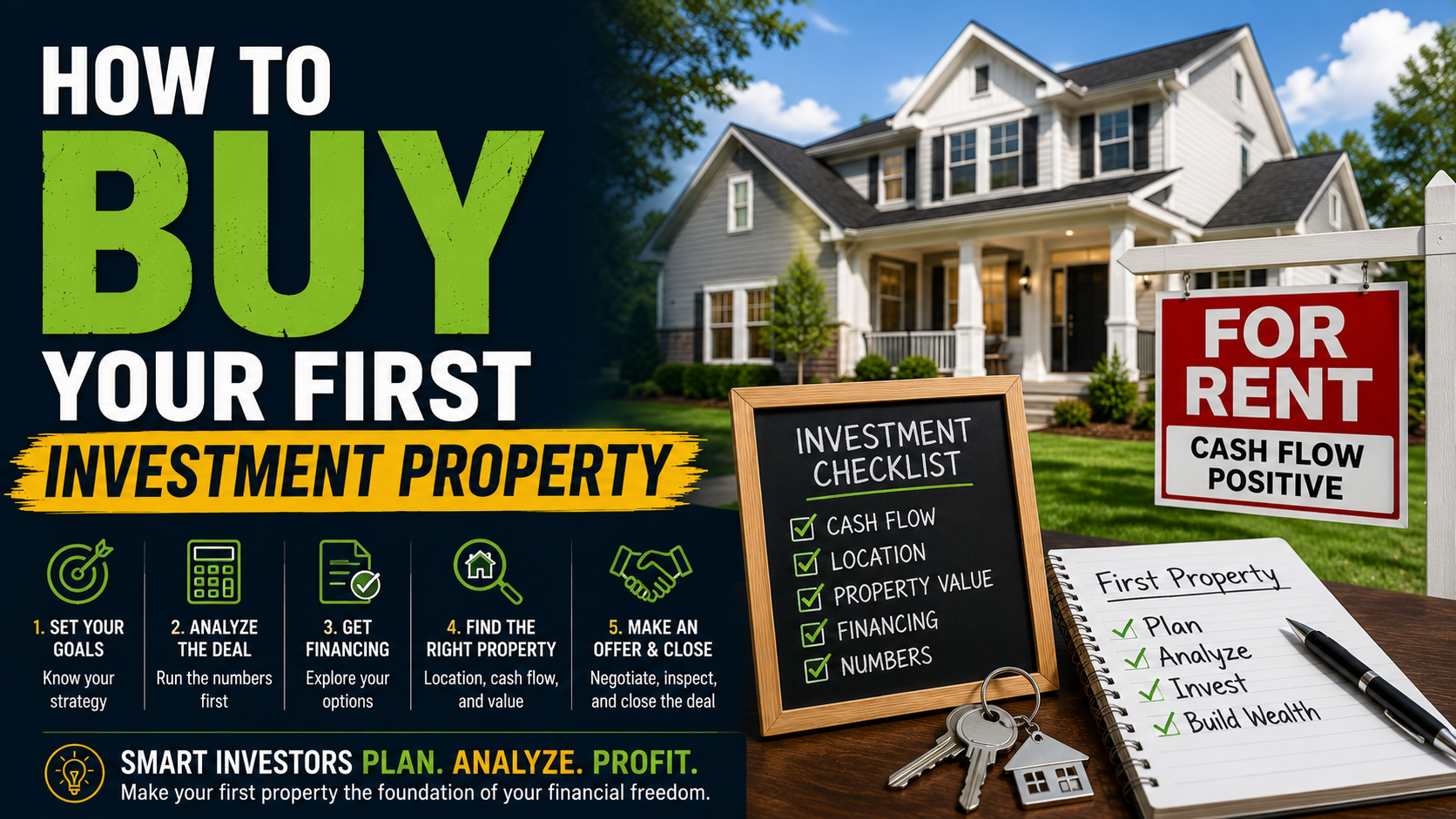
How To Buy Your First Investment Property
Buying your first investment property is one of the biggest milestones on the road to financial freedom. While it can feel overwhelming at first, the process becomes much easier when you understand the steps successful investors follow before making an offer.
The biggest mistake beginners make isn’t buying too early—it’s buying without a plan. The right property purchased at the right price can generate cash flow, build equity, and appreciate in value for years to come.
Quick Answer
To buy your first investment property, define your investing goals, choose the right strategy, secure financing, analyze multiple deals, inspect the property, and purchase only when the numbers make sense.
Step 1: Decide What Type of Investor You Want to Be
Not every investment property serves the same purpose. Before shopping for properties, determine your strategy.
- Long-term rental property
- House flipping
- Wholesaling
- BRRRR investing
- Short-term rentals
- Small multifamily properties
Your investing strategy determines the type of property you’ll search for and how you’ll evaluate each opportunity.
Step 2: Set Your Budget
Know exactly how much you can comfortably invest before contacting sellers or lenders.
Consider your down payment, closing costs, repairs, emergency reserves, insurance, and ongoing maintenance expenses.
Budget Checklist
- Down payment
- Closing costs
- Repair budget
- Property taxes
- Insurance
- Maintenance reserve
- Vacancy reserve
Step 3: Get Pre-Approved or Arrange Financing
Having financing ready gives you credibility and allows you to move quickly when you find a good opportunity.
Explore conventional loans, FHA loans (if applicable), portfolio lenders, hard money loans, private lenders, or seller financing depending on your strategy.
Step 4: Analyze Every Deal
Successful investors never buy based on emotion. They buy based on numbers.
Calculate:
- Purchase price
- After Repair Value (ARV)
- Repair costs
- Holding costs
- Cash flow
- Return on Investment (ROI)
- Cap rate
- Maximum Allowable Offer (MAO)
Pro Tip
Analyze dozens of properties before buying your first one. The more deals you evaluate, the easier it becomes to recognize a great investment.
Step 5: Perform Due Diligence
Never skip inspections or property research.
Verify repair costs, neighborhood trends, comparable sales, rental demand, zoning, title issues, taxes, and potential hidden expenses before closing.
Step 6: Build Your Team
Successful investors surround themselves with professionals.
- Real estate agent
- Lender
- Contractor
- Home inspector
- Closing attorney or title company
- Insurance agent
- CPA
Common First-Time Investor Mistakes
- Overpaying for properties
- Ignoring repair costs
- Buying with emotion
- Skipping inspections
- Not budgeting for vacancies
- Underestimating maintenance
- Failing to analyze cash flow
📊 Analyze Every Investment Property Like a Pro
Use the LREI Deal Analyzer to calculate ARV, repair costs, ROI, cash flow, BRRRR projections, and Maximum Allowable Offer before you buy.
📘 Learn Before You Buy
The best investment you can make is in your education. Download the FREE first chapter of The Real Estate Investing Blueprint and learn how experienced investors find profitable deals and avoid costly mistakes.
Final Thoughts
Buying your first investment property doesn’t require perfection—it requires preparation. By choosing the right strategy, analyzing every deal carefully, surrounding yourself with experienced professionals, and continuing to learn, you’ll dramatically increase your chances of long-term success.
Remember, your first investment property is more than just a purchase. It’s the beginning of building wealth, generating passive income, and creating financial freedom for years to come.
Frequently Asked Questions
How much money do I need to buy my first investment property?
The amount depends on your financing and investment strategy. Some investors start with a small down payment, while others begin with wholesaling or partnerships requiring much less cash.
Should I buy a rental property or flip a house first?
It depends on your goals. Rental properties focus on long-term income, while flipping aims for short-term profits.
How do I know if a property is a good deal?
Evaluate the purchase price, repair costs, projected income, cash flow, ROI, and local market conditions before making an offer.
Can I buy an investment property with bad credit?
Yes. Many investors use creative financing, partnerships, seller financing, or wholesaling while improving their credit.
What’s the biggest mistake first-time investors make?
The most common mistake is buying based on emotion instead of carefully analyzing the numbers before purchasing.
“`