
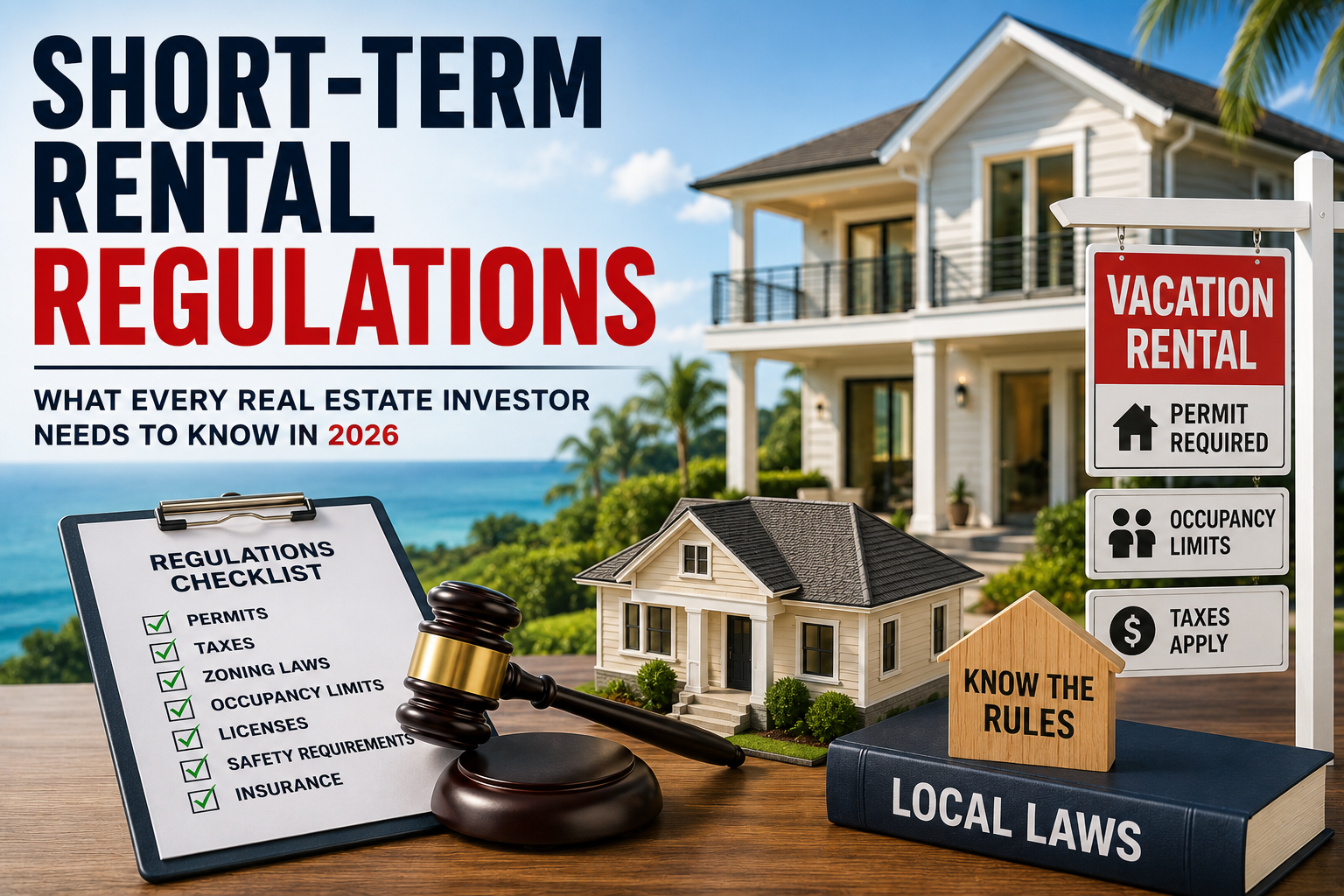

Short-Term Rental Regulations: What Every Real Estate Investor Needs to Know in 2026
Short-term rentals can generate impressive cash flow, but regulations are changing rapidly. Understanding local laws can help investors avoid costly fines, legal issues, and unexpected restrictions.
What Are Short-Term Rental Regulations?
Short-term rental regulations are rules established by cities, counties, homeowners associations, and state governments that govern how properties can be rented for short periods of time.
These regulations typically apply to properties rented for fewer than 30 days through platforms such as Airbnb, Vrbo, and other vacation rental websites.
As short-term rentals have become more popular, many local governments have introduced new restrictions designed to balance tourism, housing availability, neighborhood concerns, and tax collection.
Why Regulations Matter to Real Estate Investors
Many investors are attracted to short-term rentals because they often generate higher monthly income than traditional long-term rentals.
However, regulations can dramatically affect profitability.
An investor may purchase a property expecting strong Airbnb income only to discover that local rules limit occupancy, require permits, impose taxes, or prohibit short-term rentals altogether.
Understanding these regulations before purchasing a property can help investors avoid expensive mistakes.
Common Short-Term Rental Restrictions
Permit Requirements
Some cities require investors to obtain a short-term rental permit before operating a property.
Occupancy Limits
Many municipalities limit the number of guests allowed based on the size of the property.
Primary Residence Rules
Certain cities only allow short-term rentals in a property that serves as the owner’s primary residence.
Tax Collection
Many local governments require operators to collect and remit hotel occupancy taxes.
Noise and Parking Regulations
Neighborhood complaints often lead to stricter enforcement of parking, trash, and noise ordinances.
Researching Local Regulations Before You Buy
- City ordinances
- County regulations
- Zoning requirements
- HOA restrictions
- Permit availability
- Local tax obligations
- Pending legislation
- Neighborhood restrictions
Spending a few hours researching regulations can save thousands of dollars and prevent future legal headaches.
Need Help Analyzing Short-Term Rental Deals?
Before buying any Airbnb or vacation rental property, make sure the numbers work. Analyze cash flow, expenses, occupancy rates, and potential returns before making an offer.
Final Thoughts
Short-term rental regulations are becoming one of the most important factors investors must consider when evaluating potential deals.
The best investors understand that cash flow projections only matter if the property can legally operate as intended.
Before purchasing a short-term rental, take time to understand local laws, review permit requirements, evaluate future regulatory risks, and run detailed financial projections.
Investors who combine proper due diligence with strong deal analysis will be in a much better position to build sustainable long-term wealth through real estate.
Get Your Free Real Estate Investing Ebook
Learn wholesaling, rental properties, house flipping, creative financing, deal analysis, and other proven strategies used by successful investors.