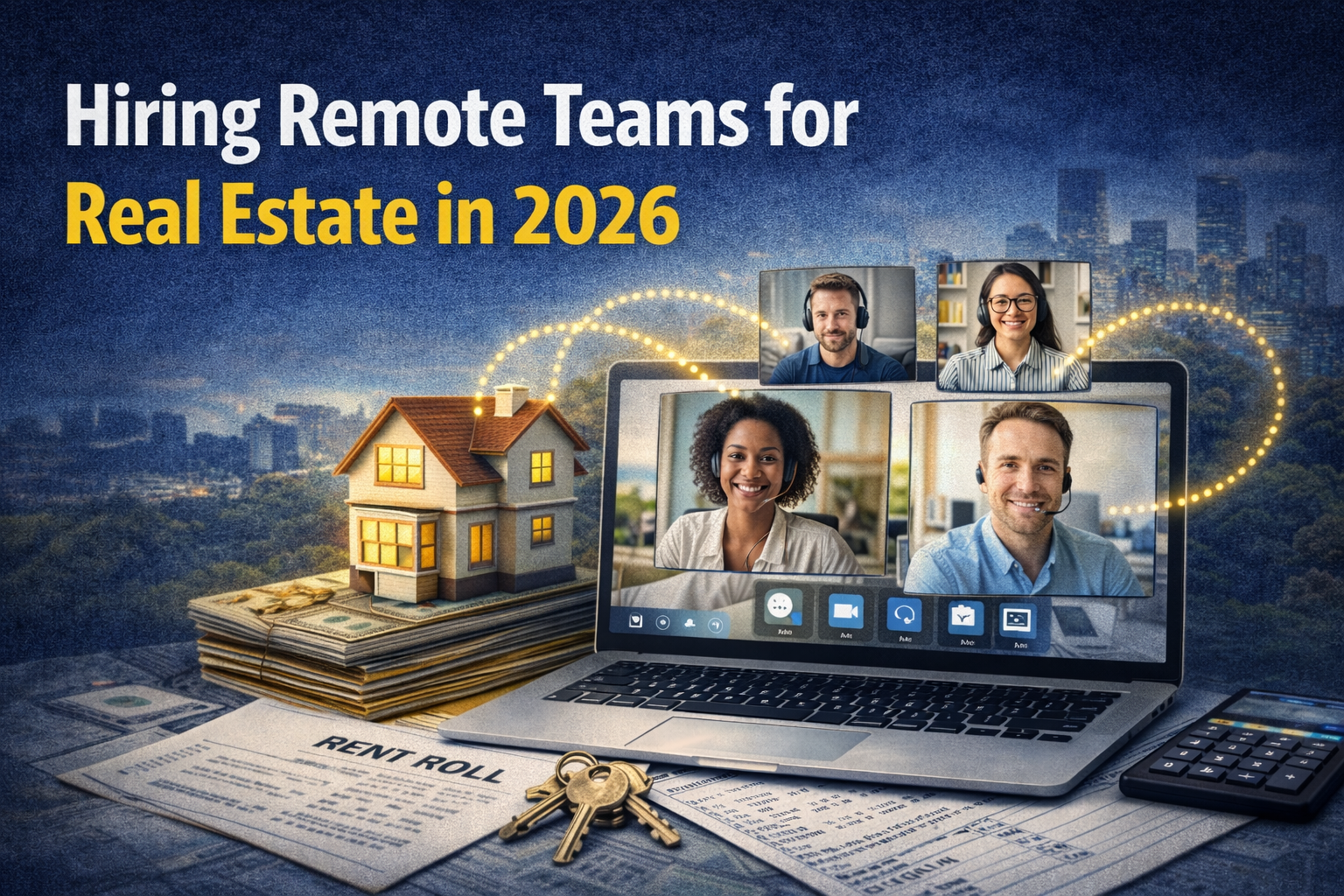
Hiring Remote Teams for Your Real Estate Business in 2026
If you’re trying to grow a real estate business by doing everything yourself… you’re going to hit a wall.
Fast.
Because here’s the truth most investors avoid:
You don’t scale your business by working harder—you scale by building a team.
And in 2026, that team doesn’t have to be local.
The smartest investors today are building remote teams that handle lead generation, follow-up, marketing, admin work, and even deal coordination—without ever stepping into an office.
Let’s break down how to do it the right way.
Why Remote Teams Are the Future of Real Estate
Real estate used to be a local game.
Now? It’s a systems game.
With the right tools, you can run your business from anywhere and build a team across different cities—or even countries.
Remote teams allow you to:
• reduce overhead costs
• operate 24/7
• scale faster
• focus on high-value activities
• build a business—not just a job
This is how modern investors grow.
What Tasks You Should Outsource First
Not everything needs to be outsourced—but the right tasks should be.
Start by removing low-value, time-consuming work from your plate.
1. Lead Generation
This includes:
• pulling lists
• skip tracing
• cold calling
• texting campaigns
These are essential—but they don’t require YOU.
2. Administrative Work
Tasks like:
• data entry
• CRM management
• appointment scheduling
• email responses
These tasks eat time and slow you down.
3. Marketing
Your team can handle:
• social media posting
• content creation
• ad management
• lead nurturing
Consistency here is key—and a team helps maintain it.
4. Follow-Up Systems
Most deals come from follow-up.
Your team can:
• call leads
• send messages
• track conversations
• re-engage old prospects
This alone can increase your deal flow significantly.
Key Roles to Build First
If you’re starting from scratch, focus on these roles:
Virtual Assistant (VA)
Handles admin tasks and keeps your business organized.
Lead Manager
Communicates with incoming leads and qualifies them.
Acquisition Manager
Talks to sellers, negotiates deals, and closes contracts.
Marketing Assistant
Handles content, ads, and lead generation systems.
You don’t need all of these at once.
Start small. Scale smart.
Where to Find Remote Team Members
In 2026, finding talent is easier than ever.
Look on:
• freelance platforms
• virtual assistant agencies
• social media groups
• referrals from other investors
But don’t just hire fast—hire right.
How to Hire the Right People
Hiring is where most people fail.
They focus on cost instead of quality.
Here’s what actually matters:
• communication skills
• reliability
• willingness to learn
• alignment with your goals
A cheap hire that doesn’t perform will cost you more in the long run.
Build Systems Before You Hire
This is critical.
Don’t hire people to “figure things out.”
Create simple systems first:
• scripts for calls
• processes for lead handling
• clear task instructions
• defined expectations
Your team should step into a system—not chaos.
Communication Is Everything
Remote teams only work if communication is clear.
Set expectations:
• daily check-ins
• task tracking
• performance updates
Use tools like:
• messaging apps
• project management tools
• CRM systems
Clarity prevents confusion.
Train and Improve Continuously
Your team will only perform as well as they are trained.
That means:
• onboarding properly
• giving feedback
• improving scripts
• refining processes
The better your training, the better your results.
Measure Performance
If you don’t track performance, you’re guessing.
Track things like:
• number of calls made
• leads generated
• appointments set
• deals closed
This helps you:
• identify weak spots
• improve systems
• increase efficiency
Data drives growth.
Common Mistakes to Avoid
Let’s keep it real—most people mess this up.
Avoid:
Hiring too fast
Not having systems in place
Poor communication
Micromanaging everything
Not tracking performance
These mistakes slow growth and waste money.
How Remote Teams Help You Scale
Once your team is in place, everything changes.
Instead of doing everything yourself, you focus on:
• closing deals
• building relationships
• growing your business
Your team handles the rest.
That’s leverage.
The Bigger Picture
Real estate is no longer just about properties.
It’s about systems and people.
The investors who win in 2026 are the ones who:
• build strong teams
• create repeatable processes
• focus on high-value activities
Because that’s how you scale beyond yourself.
Final Thoughts
If you want to grow your real estate business, you have two choices:
Do everything yourself… and stay small.
Or build a team… and scale.
Remote teams give you the ability to:
• expand faster
• reduce workload
• increase deal flow
• build a real business
And once you understand how to use them…
There’s no limit to how far you can go.
🚀 Ready to Build Your Real Estate Team?
If you want to learn how to find deals, build systems, and scale your business with the right team:
Because at the end of the day…
You don’t build a big business alone—you build it with the right people.
Leave a Reply