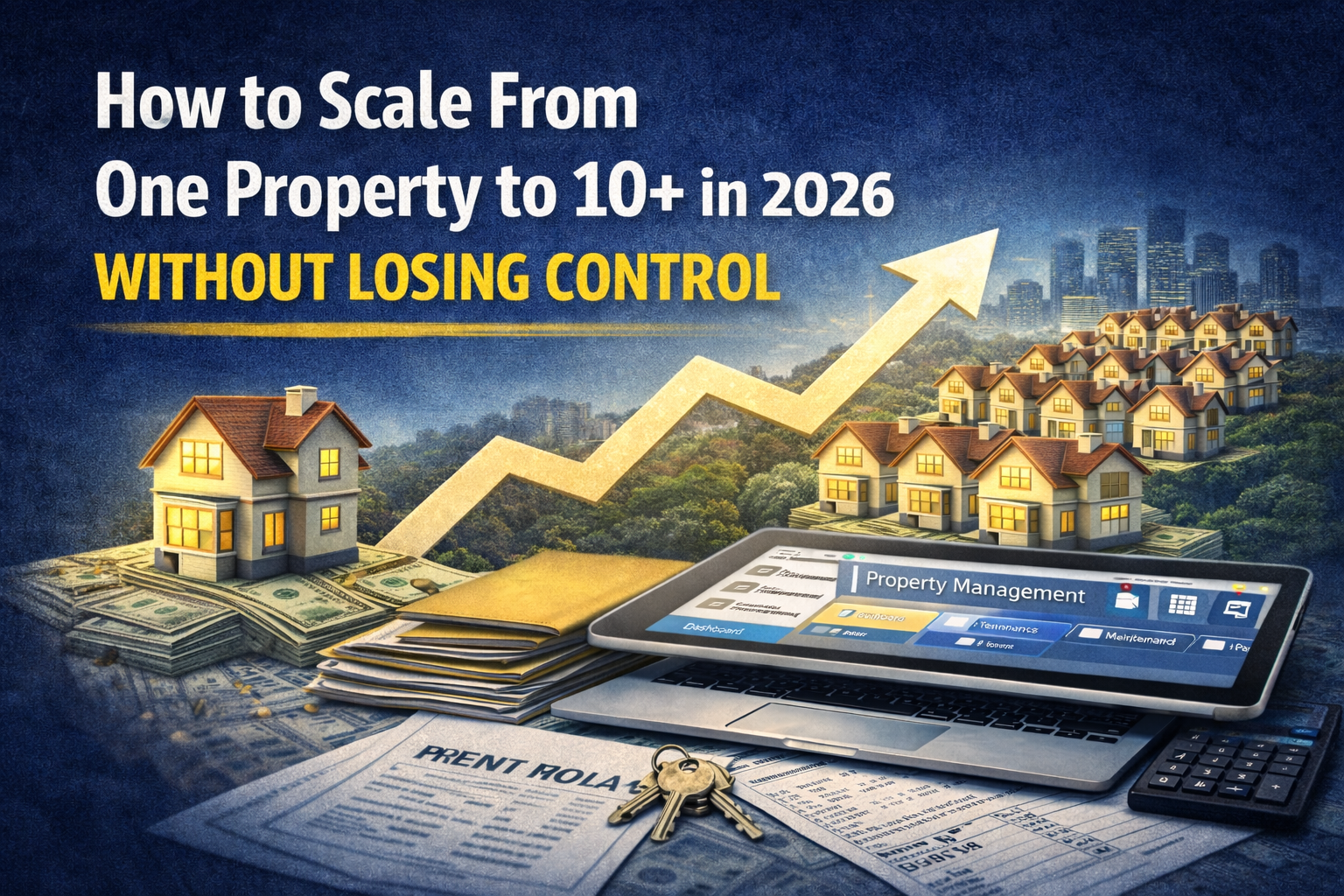
How to Scale From One Property to 10+ in 2026 Without Losing Control
Most real estate investors never make it past their first or second property.
Not because the opportunity isn’t there…
But because they don’t have a plan to scale.
They buy one deal, maybe two… and then things start breaking:
• tenants become harder to manage
• maintenance piles up
• time disappears
• systems don’t exist
Before they know it, they’re overwhelmed—and growth stops.
But here’s the truth:
Scaling in real estate isn’t about working harder…
It’s about building systems that allow you to grow without losing control.
If you want to go from 1 property to 10+ in 2026, this is the blueprint.
Why Most Investors Fail to Scale
Let’s keep it real.
Most people treat real estate like a side hustle instead of a business.
They:
• manage everything manually
• don’t track their numbers
• rely on memory instead of systems
• react instead of plan
That works for one property.
It fails at five.
And it completely breaks at ten.
Scaling requires a different mindset.
Step 1: Treat Your Portfolio Like a Business
The moment you decide to scale, you need to shift your thinking.
You are no longer just an investor.
You are a business owner.
That means:
• systems over chaos
• processes over guesswork
• data over emotion
Every decision should move you toward structure and efficiency.
Step 2: Build a Property Management System Early
This is where most people go wrong.
They wait until they’re overwhelmed before building systems.
You need systems from day one.
Your property management system should handle:
• rent collection
• tenant communication
• maintenance requests
• lease tracking
• financial reporting
Without this, scaling will feel impossible.
Step 3: Focus on Cash Flow, Not Just Deals
A lot of investors chase properties…
But ignore performance.
Scaling only works when your properties produce consistent income.
You need to track:
• monthly cash flow
• expenses
• vacancy rates
• maintenance costs
Because if your first few deals aren’t solid…
Scaling will multiply your problems.
Step 4: Standardize Everything
Consistency is what allows you to scale.
You need repeatable processes for:
• finding deals
• screening tenants
• handling maintenance
• collecting rent
• managing turnovers
If every property is handled differently, you’ll lose control fast.
Standardization = scalability.
Step 5: Leverage Other People
You cannot scale alone.
At some point, you need help.
This could include:
• property managers
• virtual assistants
• contractors
• partners
Your job is not to do everything.
Your job is to build a system where everything gets done.
Step 6: Use the Right Tools
In 2026, technology is your advantage.
Use tools for:
• rent collection
• communication
• accounting
• deal analysis
The goal is automation.
Less manual work = more growth.
Step 7: Reinvest Your Profits
Scaling requires capital—but not as much as people think.
Many investors grow by:
• reinvesting cash flow
• refinancing properties
• using creative financing
• partnering with others
The key is momentum.
Your first few deals should fuel your next ones.
Step 8: Master One Strategy First
Don’t try to do everything.
Pick one strategy:
• buy and hold
• wholesaling
• BRRRR
• fix and flip
Master it.
Then scale it.
Trying to do too much too early slows everything down.
Step 9: Monitor and Adjust
Scaling isn’t “set it and forget it.”
You need to constantly monitor:
• performance
• tenant satisfaction
• expenses
• cash flow
Then adjust as needed.
Control comes from awareness.
Step 10: Think Long-Term
Scaling to 10+ properties doesn’t happen overnight.
But it happens faster than you think when you have:
• systems
• consistency
• discipline
Most people quit too early.
The ones who win stay focused.
Common Mistakes to Avoid
Let’s call these out clearly:
Trying to scale without systems
Overleveraging too quickly
Ignoring tenant quality
Not tracking finances
Doing everything yourself
These mistakes will slow you down—or stop you completely.
The Real Secret to Scaling
It’s not deals.
It’s not money.
It’s not even experience.
It’s systems.
Because systems give you:
• control
• consistency
• scalability
• freedom
Without systems, more properties = more stress.
With systems, more properties = more income.
Final Thoughts
Scaling from 1 property to 10+ in 2026 is not complicated…
But it does require discipline.
You need to:
• build systems early
• focus on cash flow
• standardize your process
• leverage people and tools
• think like a business owner
Because at the end of the day…
You don’t build wealth by owning more properties.
You build wealth by managing them the right way.
🚀 Ready to Scale Your Real Estate Business?
If you want to learn how to find deals, structure them, and build a system that actually scales:
Because the goal isn’t just to own one property…
It’s to build a portfolio that produces income for years to come.
Leave a Reply