
How To Create a Real Estate Business Plan: A Beginner’s Blueprint for Success (2026)
Quick Answer
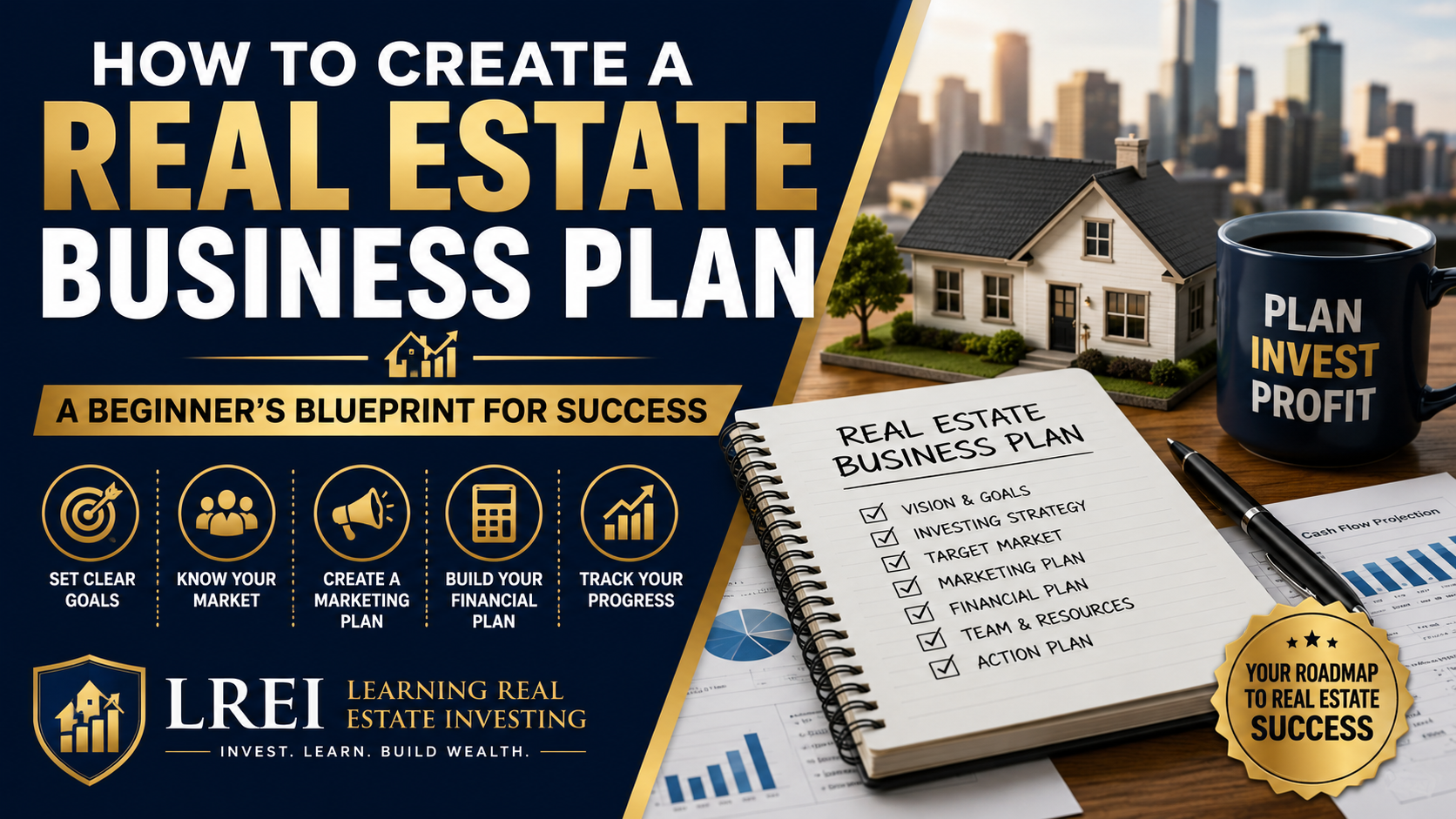
A real estate business plan is your roadmap for building a successful investing business. It outlines your goals, investing strategy, target market, marketing plan, financial projections, and weekly action steps. Instead of chasing random deals, a business plan helps you stay focused, make better decisions, and build long-term wealth.
Key Takeaways
- Treat your investing like a business from day one.
- Choose one investing strategy before looking for deals.
- Know your target market and ideal seller.
- Create a monthly marketing and budget plan.
- Track your progress using measurable KPIs.
- Review and improve your plan every month.
Table of Contents
Why Every Real Estate Investor Needs a Business Plan
Many new investors spend months looking for deals before deciding what kind of business they want to build. That is like taking a road trip without knowing the destination.
A business plan gives your investing business direction. Instead of reacting to every opportunity, you create a roadmap that helps you stay focused on your goals.
- What are my income goals?
- Which investing strategy fits my situation?
- Where will I find deals?
- How much money do I need?
- Who will help me build my business?
- How will I measure success?
The best business plans are simple enough to follow every week. Do not create a document that sits in a drawer—create one that guides your daily decisions.
Step 1: Define Your Vision
Every successful business begins with a clear vision. Decide whether your primary goal is replacing job income, creating cash flow, retiring early, building family wealth, or achieving greater financial freedom.
“I will build a real estate investing business that produces $5,000 per month in passive income within five years through rental properties.”
Step 2: Choose Your Investing Strategy
The right strategy depends on your goals, available capital, experience, and available time.
| Strategy | Startup Cost | Income Speed | Long-Term Wealth |
|---|---|---|---|
| Wholesaling | Low | Fast | Medium |
| House Flipping | High | Medium | Medium |
| Rental Properties | Medium | Slow | Excellent |
| BRRRR | Medium | Medium | Excellent |
| REITs | Low | Slow | Good |
Many successful investors begin with wholesaling to generate cash and later use those profits to purchase rental properties for long-term wealth.
Step 3: Know Your Target Market
Your plan should define a target city, preferred neighborhoods, property type, price range, ideal seller, and exit strategy.
- Fort Worth, Texas
- Single-family homes
- Under $300,000
- Motivated sellers
- Cosmetic repairs
- Wholesale or rental opportunities
Step 4: Create Your Marketing Plan
Without leads, there are no deals. Choose two or three methods and use them consistently.
- Driving for Dollars
- Direct Mail
- Cold Calling
- Facebook Ads
- Google SEO
- Networking
- Referrals
- Probate Leads
- Pre-Foreclosures
| Expense | Monthly Budget |
|---|---|
| Direct Mail | $300 |
| Facebook Ads | $250 |
| CRM Software | $60 |
| Website | $35 |
| Phone | $75 |
| Miscellaneous | $80 |
| Total | $800 |
Pick two lead-generation methods and stick with them for at least 90 days before deciding whether they are working.
Step 5: Build Your Financial Plan
Include startup costs, monthly expenses, marketing budget, revenue goals, profit goals, and emergency reserves.
- 120 leads
- 24 offers
- 6 contracts
- 4 closed deals
- $40,000 profit
Analyze Every Deal Before You Make an Offer
Use the LREI Deal Analyzer to estimate profit, cash flow, repair costs, return on investment, and your maximum allowable offer.
Step 6: Build Your Team
- Real estate agent
- Contractor
- CPA
- Attorney
- Mortgage lender
- Insurance agent
- Property manager
- Mentor
Your team can often solve problems in minutes that would take you weeks to figure out on your own.
Step 7: Track Your Progress
| KPI | Weekly Goal |
|---|---|
| New Leads | 20 |
| Seller Calls | 15 |
| Deals Analyzed | 10 |
| Offers Submitted | 5 |
| Contracts Signed | 1 |
| Deals Closed | 1 |
Your first business plan will not be perfect. The important thing is to start, take action, track results, and improve it over time.
Real Estate Business Plan Checklist
- ✅ Defined your investing vision
- ✅ Chosen your investing strategy
- ✅ Identified your target market
- ✅ Created a marketing budget
- ✅ Set financial goals
- ✅ Built your team
- ✅ Established weekly KPIs
- ✅ Scheduled a monthly business review
What Type of Real Estate Investor Are You?
Take the free quiz to discover the strategy that best matches your goals, available time, capital, and risk tolerance.
Real Estate Investing Resource Center
Use these tools and guides to move from planning to taking action.
📘 The Real Estate Investing Blueprint
Learn wholesaling, flipping, rentals, BRRRR, creative financing, and deal analysis.
📈 LREI Deal Analyzer 3.0
Evaluate wholesale, flip, rental, and BRRRR deals with the advanced version.
🚀 100K Blueprint
Create a focused roadmap for building a six-figure business.
🗓️ The 100K Plan in 90 Days
Turn your financial target into practical daily and weekly action steps.
💬 LREI Action Lab
Get investor motivation, real estate quotes, and access to useful calculators.
Frequently Asked Questions
Do I really need a real estate business plan?
Yes. A written plan keeps you focused, helps you budget, and gives you a way to measure whether your investing activity is moving you toward your goals.
How long should my business plan be?
One to three pages is enough for many beginner investors as long as it clearly covers goals, strategy, market, marketing, finances, and weekly actions.
Should I start an LLC?
Many investors eventually do, but the right structure depends on your legal, tax, financing, and liability situation. Speak with a qualified attorney and CPA.
What is the best strategy for beginners?
Wholesaling may fit beginners with limited capital, while house hacking or rental property may fit investors focused on long-term ownership.
How often should I update my business plan?
Review it monthly and make larger revisions quarterly or whenever your strategy, market, or financial situation changes significantly.
Ready to Build Your Real Estate Investing Business?
Every successful investor starts with a plan. Download the free chapter of The Real Estate Investing Blueprint and learn how to find deals, analyze properties, negotiate with sellers, and build a profitable investing business.