
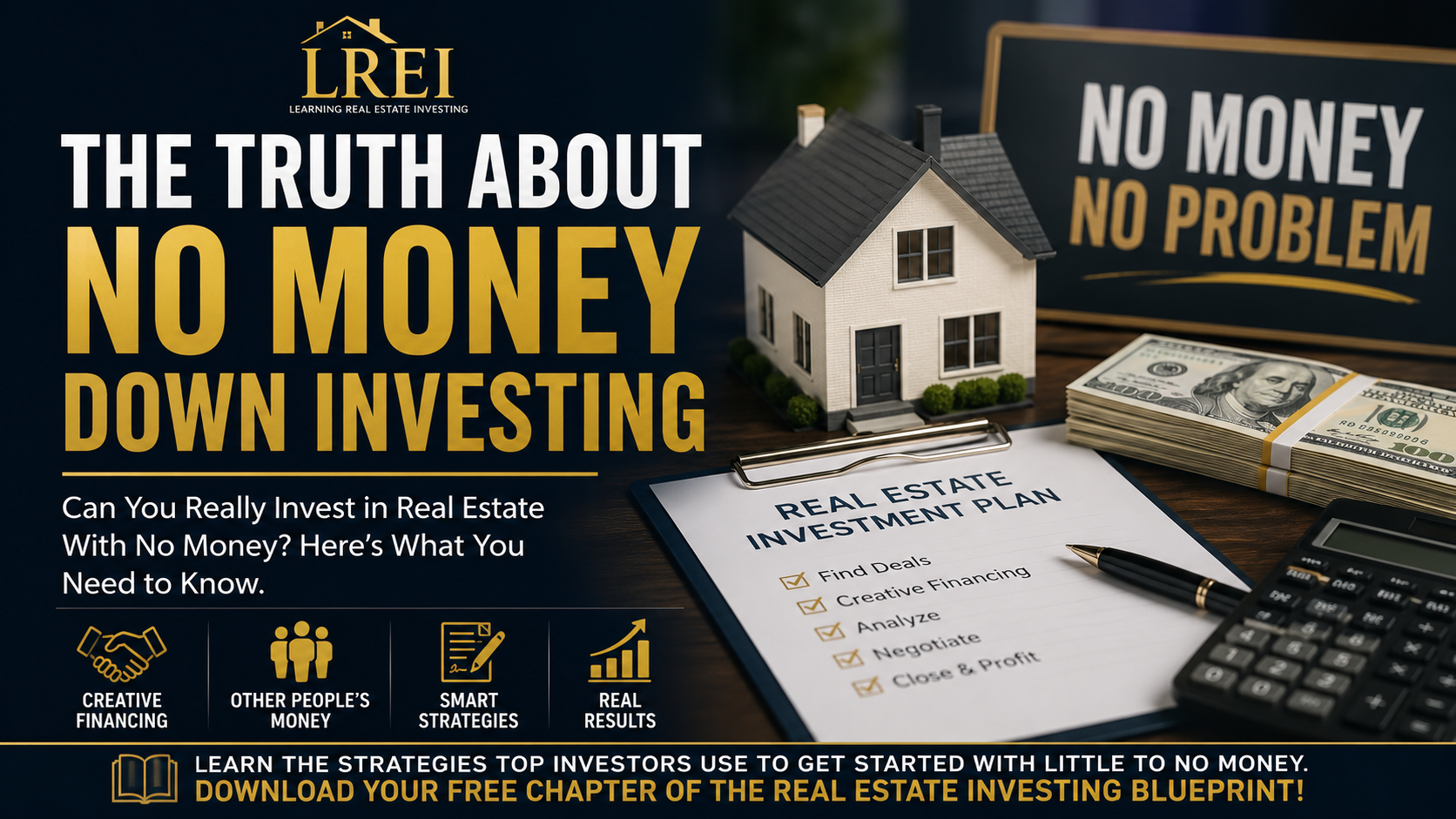
The Truth About No Money Down Investing
One of the biggest promises you’ll see online is this:
“Buy Real Estate With No Money Down.”
It sounds amazing.
Own rental properties.
Flip houses.
Build wealth.
Never use your own money.
But is it actually true?
The answer is yes… and no.
There are legitimate ways to control or purchase real estate without putting large amounts of your own cash into the deal—but most of the advertisements leave out the hard work, education, and creativity required.
Let’s separate fact from fiction.
The Biggest Myth About No Money Down Investing
Many beginners believe they can wake up tomorrow and buy a rental property worth $300,000 without spending a single dollar.
That’s almost never how successful investors operate.
“No money down” usually means using other people’s money, seller financing, partnerships, or controlling a property without owning it—not magically buying real estate for free.
Professional investors simply understand how to structure deals.
What “No Money Down” Really Means
In most cases, investors are using one of these strategies:
- Other People’s Money (OPM)
- Private lenders
- Hard money lenders
- Seller financing
- Subject-To financing
- Lease options
- Wholesaling
- Partnerships
- Creative financing
Notice something?
Someone is still bringing money to the deal.
It just isn’t always you.
Strategy #1: Wholesaling
Wholesaling is often the easiest way to get started with little money.
Instead of purchasing the property, you place it under contract and assign that contract to another investor for a fee.
Example
- Seller agrees to sell for $100,000
- Investor agrees to pay $110,000
- You assign the contract
- You earn a $10,000 assignment fee
Many wholesalers start with less than $500.
Strategy #2: Seller Financing
Sometimes a property owner is willing to finance the purchase themselves instead of requiring a bank loan.
You make payments directly to the seller.
This works well when:
- The seller owns the property outright
- They want monthly income
- They have difficulty selling traditionally
Strategy #3: Subject-To Deals
With a Subject-To transaction, you purchase a property while leaving the seller’s existing mortgage in place.
You take control of the property and make the mortgage payments.
This strategy requires education and proper legal documentation but can be powerful in the right situation.
Strategy #4: Partnerships
One investor has money.
The other has:
- Time
- Knowledge
- Deal finding skills
- Management ability
They split the profits.
This is one of the fastest ways beginners begin investing without large savings.
Strategy #5: Private Money
Private lenders are individuals who loan money for investment properties.
They may be:
- Friends
- Family
- Business owners
- Retired investors
- High-income professionals
You provide the deal.
They provide the capital.
Everyone profits.
What You’ll Still Need
Even if you don’t invest much cash, you’ll still need:
- Education
- Contracts
- Marketing
- Networking
- Negotiation skills
- Due diligence
- Time
- Persistence
There is no shortcut around building these skills.
The Hidden Costs Beginners Forget
Many YouTube videos never mention these expenses:
- Earnest money deposits
- Inspection fees
- Gas
- Driving for dollars
- CRM software
- Marketing lists
- Skip tracing
- Phone service
- Business cards
- Website hosting
Fortunately, many of these costs are relatively small and can be scaled as your business grows.
Why Most People Fail
The biggest obstacle isn’t money.
It’s taking action.
Many beginners spend months watching videos but never:
- Call motivated sellers
- Analyze deals
- Make offers
- Build a buyers list
- Network with investors
Knowledge without action never produces income.
A Better Way to Think About No Money Down
Instead of asking:
“How can I invest with absolutely no money?”
Ask yourself:
“How can I create enough value that investors will gladly fund my deals?”
That mindset shift changes everything.
Final Thoughts
Yes, it is possible to get started in real estate without a large bank account.
But successful investors replace cash with:
- Knowledge
- Creativity
- Relationships
- Persistence
- Consistent action
The more problems you learn to solve, the easier it becomes to attract deals, funding, and long-term wealth.
📘 Ready to Learn Real Estate the Right Way?
Stop wasting months piecing together advice from random videos.
The Real Estate Investing Blueprint walks you through wholesaling, rental properties, house flipping, BRRRR investing, creative financing, deal analysis, finding motivated sellers, making offers, and building long-term wealth—even if you’re starting from scratch.
See exactly how successful investors find deals, analyze properties, and build financial freedom—one step at a time.